

It’s rare for an idea to hit you all at once. Many of us like to think it will thanks to Hollywood’s obsession with earth-shattering revelations, but most of the time it’s not so immediate. An idea might take on a thousand forms before it hardens into something malleable, but once it does it can be shaped into a vessel for exploration.
The exploration itself is a distinct challenge, one I’m confident I’ll have more to vent on in future pieces, but how does one get to the point of setting sail? How does one know when an idea is worthy of conviction? If the Plicity team had the answer we’d probably be building the world’s most opinionated AI consultancy, so for the time being we’re at least moderately convinced that ignorance is bliss. And as we continue to build, I suspect we’ll come in close contact with a truth I’ve grown to appreciate deeply:
Ignorance, in its rawest form, is much more than bliss. It’s potential energy.
For those of you with the poise to sit through Zen and the Art of Motorcycle Maintenance, the notion of Classical vs. Romantic understanding might ring a dizzying bell. To put it simply, it’s the idea that there’s a fundamental split between reason and intuition, or between how we understand the world intellectually versus how we experience it directly. Another way to think about it would be two opposing lenses through which we interpret reality—one that dissects and explains, and one that feels and appreciates.
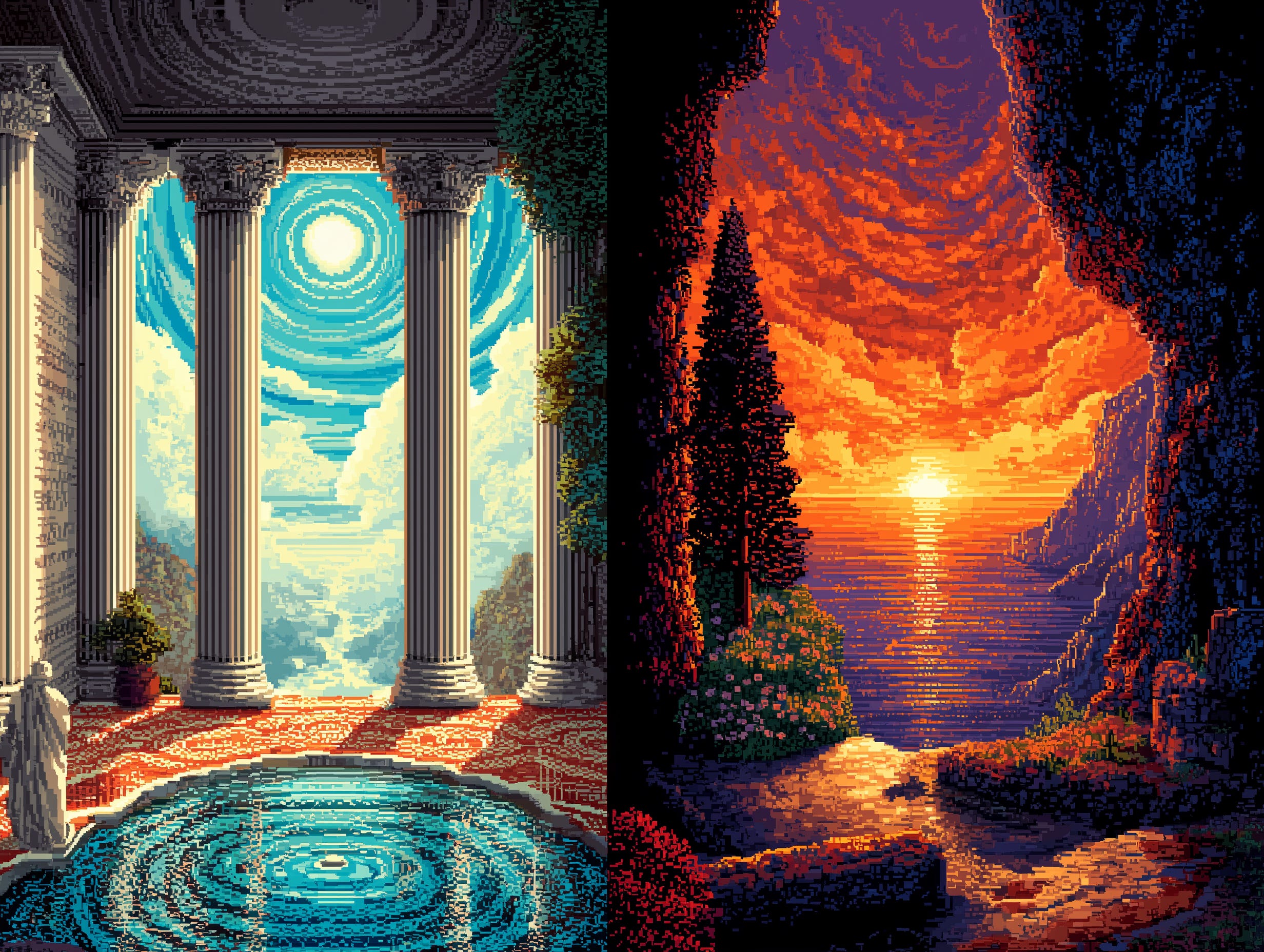
What’s important to understand about this split framing of the world is that there’s room for both perspectives to co-exist, in fact it’s imperative that they do, for each pillar of perception has a lot to learn from the other’s perceived “ignorance”.
Modern society offers many ways to frame this concept, but one particularly compelling example is the recent rise of vibe coding. If you aren’t familiar with the term it may be worthwhile to get yourself up to speed, but let’s set one thing straight: the name is ill-equipped for the future. It’s almost as if it was intentionally coined to make anyone identifying as a “vibe coder” feel a slight jolt of self deprecation. But branding aside, we’ve all been embracing the vibes lately, and what we’ve found is that interesting things tend to occur when people with different worldviews and varying levels of technical expertise take hold of an LLM and prompt little pieces of software to life.
Left in the hands of a software engineer with a Classically oriented mind, you might get “a rotating cube filled with particles that adhere to an impressively realistic physics engine”. Satisfying. Pass it off to a musician turned product designer (yes, Romantically oriented) and it’s only a matter of time before a “cosmic jazz fusion piano that plays like a tongue drum” materializes before your eyes. Rad. The list goes on and on, and for what it’s worth, many of the final outputs aren’t all that awe-inspiring. But some of them are.
These select few, the ones that surprise and delight, got us thinking. What does this new shift in software creation mean for the world? What are the ripple effects that will extend beyond the tech scene? What will non-technical people do when they can create with code? These are hard questions to answer holistically, but one thing we’re convinced of is that people will find new and exciting ways to express themselves.
Another thing we’re convinced of is how one-sided much of social content has become. If software is eating the world and AI is eating software, short-form videos are feasting on the attention span of a concerning percentage of the global population. Over the past year, daily views on YouTube Shorts increased from 70 billion to 200 billion. That translates to roughly 8.3 billion views per hour, 139 million views per minute, and 2.3 million views per second. This doesn’t even include TikTok or Instagram Reels.
To anyone who has built a life creating this short form content, I applaud your entrepreneurial spirit and wish you great fortune, but what about all the passive consumers out there? Aren’t there any better alternatives that provide a more active form of engagement?
Substack does an elegant job answering this question by providing a home for the introspective among us. X answers boldly by maintaining an open pasture for real-time dialogue. But what we’ve yet to see is an answer for the emerging community of vibe creators.
And so, if there is a different, software-centric space, what does it look like? What types of minds does it provide a new playground for? That’s what we’re in the process of figuring out at Plicity. We know that (1) we want it to be interactive and social, (2) we want to empower a non-technical audience to express themselves with code, and (3) we want to move past the lizard brain dopamine loops that drive much of today’s platforms.
Outside of these three convictions, we believe that an open dialogue with the world is in order. Instead of making assumptions about how people might explore this new terrain, we’re working to put something thought-provoking into their hands and soak up as much information as possible. In other words, we’re working to become a sponge for a new wave of self-expression.
You can join the waitlist by subscribing to The Pliciteer.